The verb "face" presents unique challenges that extend beyond simple conjugation rules. Understanding its past tense forms—"faced" for simple past and past participle—requires grasping contextual applications that native speakers navigate intuitively but learners often struggle with.
Mastering these forms matters because "face" operates across multiple registers, from casual conversation to formal business communication. The distinction between facing something directly versus confronting it metaphorically shapes meaning in ways that grammar books rarely explain comprehensively.
Everyday Past Tense Forms of Face
The past tense of "face" follows regular conjugation patterns, yet its application varies significantly based on context and meaning. "Faced" serves as both the simple past tense and past participle, making it grammatically straightforward but semantically complex.
When we examine how English speakers use "faced" in daily communication, three primary patterns emerge. First, the literal sense of turning toward something or someone: "She faced the audience before speaking." Second, the confrontational meaning of dealing with challenges: "The company faced bankruptcy last quarter." Third, the directional usage indicating position or orientation: "The house faced east, catching morning sunlight."
These distinctions matter because they influence verb complements and prepositional choices. Native speakers unconsciously select different constructions—"faced with," "faced against," or "faced toward"—based on intended meaning. Non-native speakers benefit from understanding these patterns explicitly rather than relying on memorization alone.
The pronunciation remains consistent across all uses: /feɪst/ in both American and British English. This phonetic stability contrasts with other past tense forms that create pronunciation challenges, making "faced" relatively accessible for learners developing spoken fluency.
Expressions for Confronting Challenges in Past Tense
Confrontational uses of "faced" require understanding how context shapes meaning and register. The way speakers express past confrontations depends heavily on the relationship between subject and obstacle, the severity of the challenge, and the formality level required.
Professional contexts demand precision when describing past challenges. "The board faced difficult decisions regarding downsizing" carries different implications than "The board was faced with difficult decisions." The active construction suggests agency and control, while the passive construction emphasizes external pressure and reduced autonomy.
Personal narratives about overcoming obstacles often employ "faced" with emotional undertones. "I faced my fears about public speaking" implies active courage, whereas "I was faced with my worst nightmare" suggests unwilling confrontation. These distinctions influence how listeners interpret speaker agency and emotional state.
Academic and formal writing typically favor constructions that emphasize systematic approaches to challenges. "Researchers faced methodological constraints that limited data collection" positions challenges as external factors requiring scholarly problem-solving rather than personal struggles demanding emotional resolution.
Past Tense Forms for Physical Orientation
Physical orientation meanings of "faced" create specific grammatical patterns that differ from confrontational uses. These constructions typically require directional complements that specify spatial relationships clearly and precisely.
Architectural and geographical descriptions employ "faced" to establish spatial relationships permanently. "The cathedral faced west, aligned with medieval liturgical traditions" establishes both physical orientation and historical context. "The building faced the plaza, creating natural foot traffic patterns" connects orientation with functional outcomes.
Military and tactical applications of "faced" carry precise technical meanings. "The regiment faced north at dawn" indicates specific positioning with strategic implications. "The fortification faced the harbor entrance" describes defensive positioning with clear tactical advantages.
Interior design and spatial planning contexts use "faced" to describe deliberate positioning choices. "The sofa faced the fireplace, anchoring the conversation area" explains both orientation and design reasoning. "The desk faced away from distractions, optimizing focus conditions" connects positioning with productivity outcomes.
Professional and Formal Past Tense Usage
Business communication requires "faced" constructions that convey competence and strategic thinking. The choice between active and passive voice significantly impacts how colleagues and clients perceive leadership capability and organizational strength.
Executive communication often employs "faced" to demonstrate proactive problem-solving. "Leadership faced market volatility by diversifying revenue streams" positions challenges as opportunities for strategic action. "The organization faced regulatory changes through comprehensive compliance initiatives" emphasizes systematic approaches to external pressures.
Legal and contractual language uses "faced" with precise technical meanings. "The defendant faced charges of securities fraud" carries specific legal implications. "The contract faced termination due to material breach" indicates formal legal processes rather than casual dissolution.
Academic and research contexts require "faced" constructions that maintain scholarly objectivity. "Participants faced cognitive load increases when multitasking" describes experimental conditions without emotional commentary. "The methodology faced validity concerns that researchers addressed through triangulation" acknowledges limitations while demonstrating scientific rigor.
Informal and Conversational Past Tense Applications
Casual conversation employs "faced" with emotional coloring and personal perspective that formal contexts avoid. These applications often carry implicit meanings that listeners understand through shared cultural knowledge and contextual cues.
Storytelling uses "faced" to build narrative tension and character development. "My grandmother faced the Depression with determination that inspired our entire family" combines historical context with personal admiration. "The team faced elimination but somehow pulled together for an incredible comeback" creates dramatic tension through underdog positioning.
Social media and digital communication often compress complex situations into "faced" constructions. "Finally faced the truth about my career path" suggests significant personal revelation. "Faced facts about my spending habits" implies difficult self-awareness leading to behavioral change.
Generational and cultural variations influence how different groups use "faced" in casual contexts. Younger speakers often employ "faced" with intensifiers: "literally faced my worst nightmare" or "seriously faced reality." Older speakers typically use more restrained constructions: "faced the situation squarely" or "faced facts directly."
Past Tense of Face with Common Prepositions
Prepositional combinations with "faced" create distinct meanings that native speakers navigate intuitively but learners must understand systematically. Each preposition shifts emphasis and implies different relationships between subject and object.
"Faced with" indicates unwilling confrontation or external imposition. "The mayor faced with budget shortfalls" suggests circumstances beyond control requiring reactive responses. "Students faced with overwhelming coursework" implies external academic pressure rather than chosen challenges.
"Faced against" creates adversarial relationships and competitive contexts. "The startup faced against established competitors" emphasizes competitive positioning. "The candidate faced against significant opposition" suggests political or professional conflict requiring strategic responses.
"Faced toward" establishes directional relationships without confrontational implications. "The house faced toward the mountains" describes pleasant orientation. "The speaker faced toward the audience" indicates appropriate positioning for communication effectiveness.
Advanced Past Tense Constructions and Idioms
Complex constructions using "faced" require understanding how multiple grammatical elements interact to create sophisticated meanings. These patterns appear frequently in professional writing and advanced academic discourse.
Perfect tenses with "faced" create temporal relationships that simple past cannot express. "Having faced similar challenges previously, the team approached the problem systematically" establishes expertise through past experience. "By year-end, the company had faced its worst quarterly losses" creates temporal boundaries around difficult periods.
Conditional constructions with "faced" explore hypothetical scenarios and consequences. "If the organization had faced reality sooner, bankruptcy might have been avoided" suggests counterfactual reasoning about past decisions. "Had they faced the competition directly, market position could have been preserved" implies alternative strategic approaches.
Passive constructions shift focus from actors to circumstances. "The problem was faced with inadequate resources" emphasizes resource constraints rather than human agency. "The challenge was faced by multiple departments working in coordination" highlights collaborative approaches over individual efforts.
Cultural Context of Facing Challenges
Understanding how English-speaking cultures conceptualize "facing" challenges reveals deeper patterns in language use and social expectations. These cultural dimensions influence when and how speakers employ different "faced" constructions appropriately.
American English often emphasizes individual agency and personal responsibility when describing past challenges. "I faced my problems head-on" reflects cultural values of self-reliance and direct confrontation. "The company faced adversity through innovation" connects challenge management with entrepreneurial values.
British English tends toward more understated expressions that acknowledge difficulty without emotional display. "We faced rather significant obstacles" uses hedging language to minimize dramatic impact. "The situation was faced with appropriate measures" emphasizes procedural correctness over heroic action.
Professional cultures within English-speaking countries create specific expectations for how leaders should describe past challenges. Technology sector communication often emphasizes rapid adaptation: "The team faced disruption by pivoting quickly to new technologies." Financial services communication typically stresses risk management: "The firm faced market volatility through diversified strategies."
Common Mistakes with Past Tense of Face
Native speakers make systematic errors with "faced" constructions that reveal underlying grammatical complexities. These patterns help identify areas where even fluent speakers benefit from explicit grammatical awareness.
Confusion between active and passive voice creates ambiguity about agency and responsibility. "The problem was faced" lacks clear subject identification, while "Management faced the problem" establishes clear accountability. "Faced with difficulties" as a sentence fragment omits necessary subject-verb relationships.
Preposition selection errors change intended meanings significantly. "Faced against the wall" suggests confrontation where "faced toward the wall" indicates simple orientation. "Faced with opposition" implies unwilling confrontation while "faced the opposition" suggests deliberate engagement.
Tense sequence errors occur when "faced" appears in complex sentences with multiple time references. "Having faced the challenge, we are confident about future success" correctly sequences past experience with present state. "Facing the challenge yesterday, we are now prepared" incorrectly mixes past and present temporal references.
Past Tense of Face FAQ
What is the past tense of face?
The past tense of "face" is "faced." This regular verb follows standard conjugation patterns, making it relatively straightforward for learners to master mechanically, though contextual applications require deeper understanding.
How do you use faced in past perfect?
Past perfect constructions use "had faced" to establish temporal relationships between past events. "By the time help arrived, they had faced the crisis alone for hours" shows how past perfect creates chronological clarity in complex narratives.
What's the difference between faced and was faced with?
"Faced" implies active engagement and personal agency, while "was faced with" suggests external circumstances requiring reactive responses. "She faced the challenge confidently" versus "She was faced with an impossible situation" demonstrates this distinction clearly.
Can faced be used as an adjective?
While "faced" primarily functions as a past tense verb or past participle, it occasionally appears in compound adjectives describing appearance or orientation. "North-faced slopes receive less sunlight" uses "faced" as part of an adjectival construction.
How do you pronounce faced?
"Faced" is pronounced /feɪst/ in both American and British English, with a long 'a' sound followed by an unvoiced 's' and 't' combination. The pronunciation remains consistent across all contextual applications.
What prepositions work with faced?
Common prepositions include "with" (unwilling confrontation), "against" (opposition), "toward" (direction), and "by" (agency). Each preposition creates distinct meaning relationships that native speakers use to express subtle differences in confrontation, orientation, and responsibility.
Understanding the past tense of "face" requires more than memorizing "faced" as the correct form. Effective usage demands recognizing how context, register, and cultural expectations shape meaning in ways that influence professional success, academic achievement, and social integration. The patterns explored here provide frameworks for developing intuitive command over these complex but essential grammatical relationships.
Learn Any Language with Kylian AI
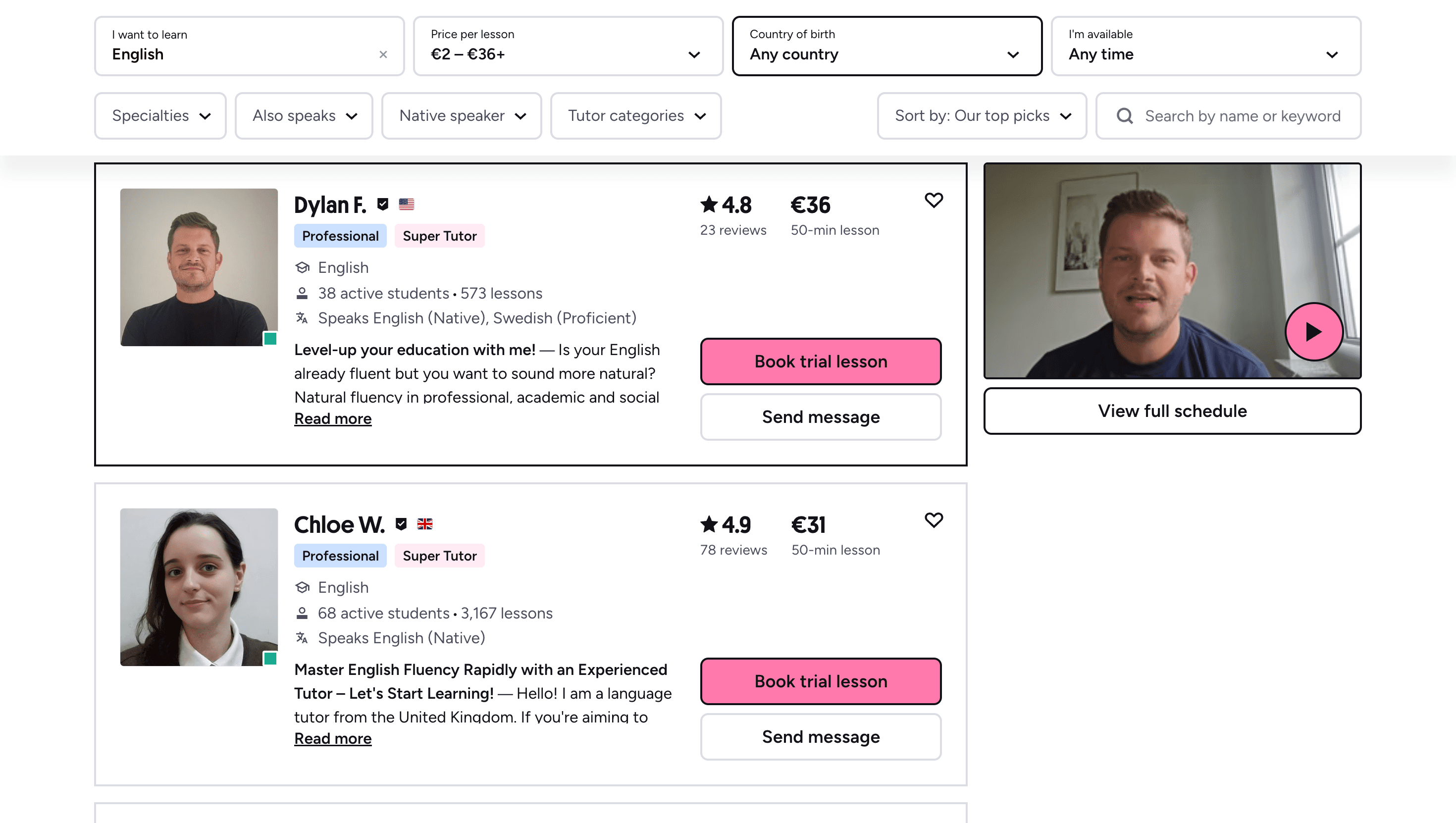
Private language lessons are expensive. Paying between 15 and 50 euros per lesson isn’t realistic for most people—especially when dozens of sessions are needed to see real progress.
Many learners give up on language learning due to these high costs, missing out on valuable professional and personal opportunities.
That’s why we created Kylian: to make language learning accessible to everyone and help people master a foreign language without breaking the bank.
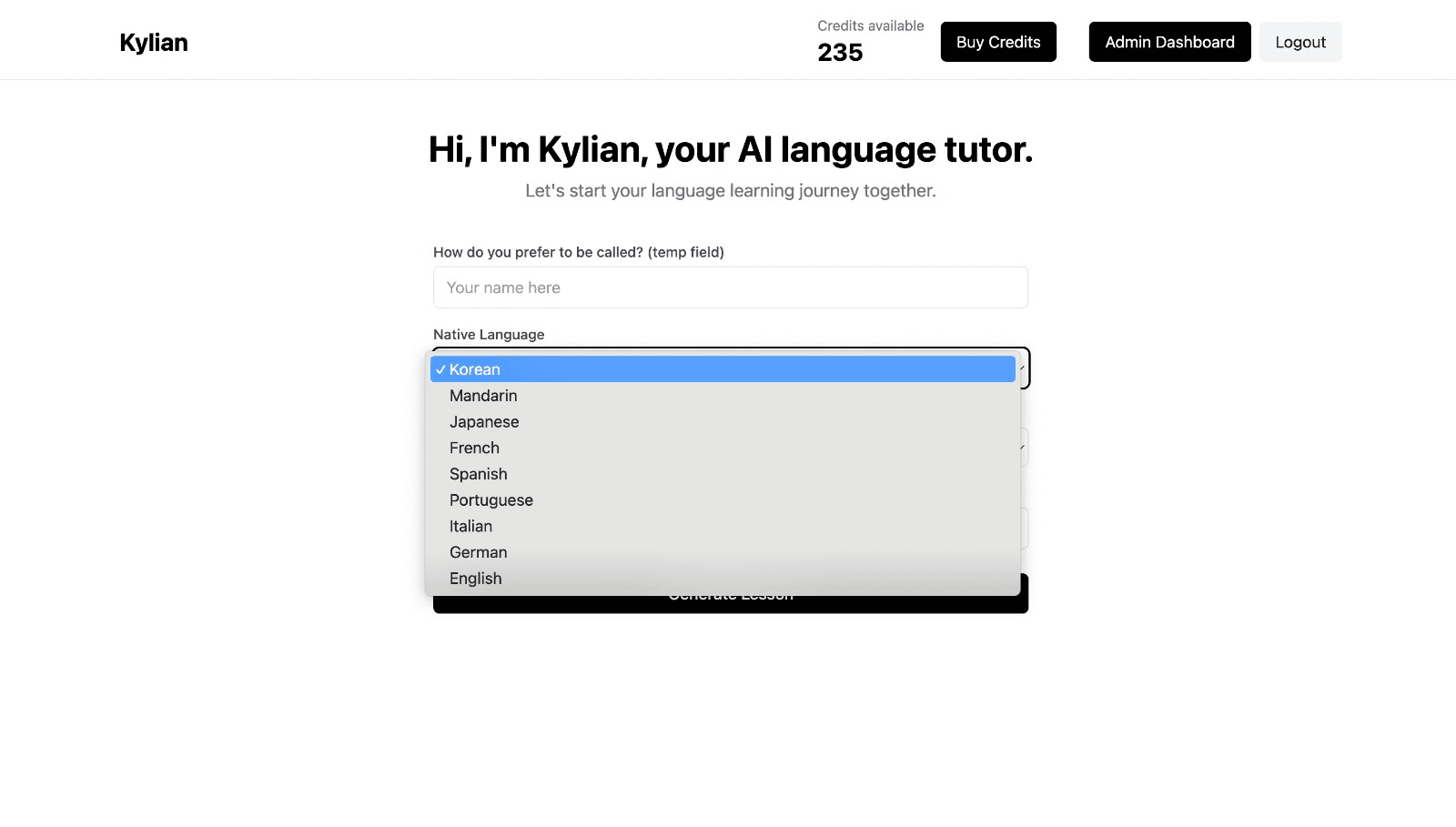
To get started, just tell Kylian which language you want to learn and what your native language is
Tired of teachers who don’t understand your specific struggles as a French speaker? Kylian’s advantage lies in its ability to teach any language using your native tongue as the foundation.
Unlike generic apps that offer the same content to everyone, Kylian explains concepts in your native language (French) and switches to the target language when necessary—perfectly adapting to your level and needs.
This personalization removes the frustration and confusion that are so common in traditional language learning.
Choose a specific topic you want to learn
Frustrated by language lessons that never cover exactly what you need? Kylian can teach you any aspect of a language—from pronunciation to advanced grammar—by focusing on your specific goals.
Avoid vague requests like “How can I improve my accent?” and be precise: “How do I pronounce the R like a native English speaker?” or “How do I conjugate the verb ‘to be’ in the present tense?”
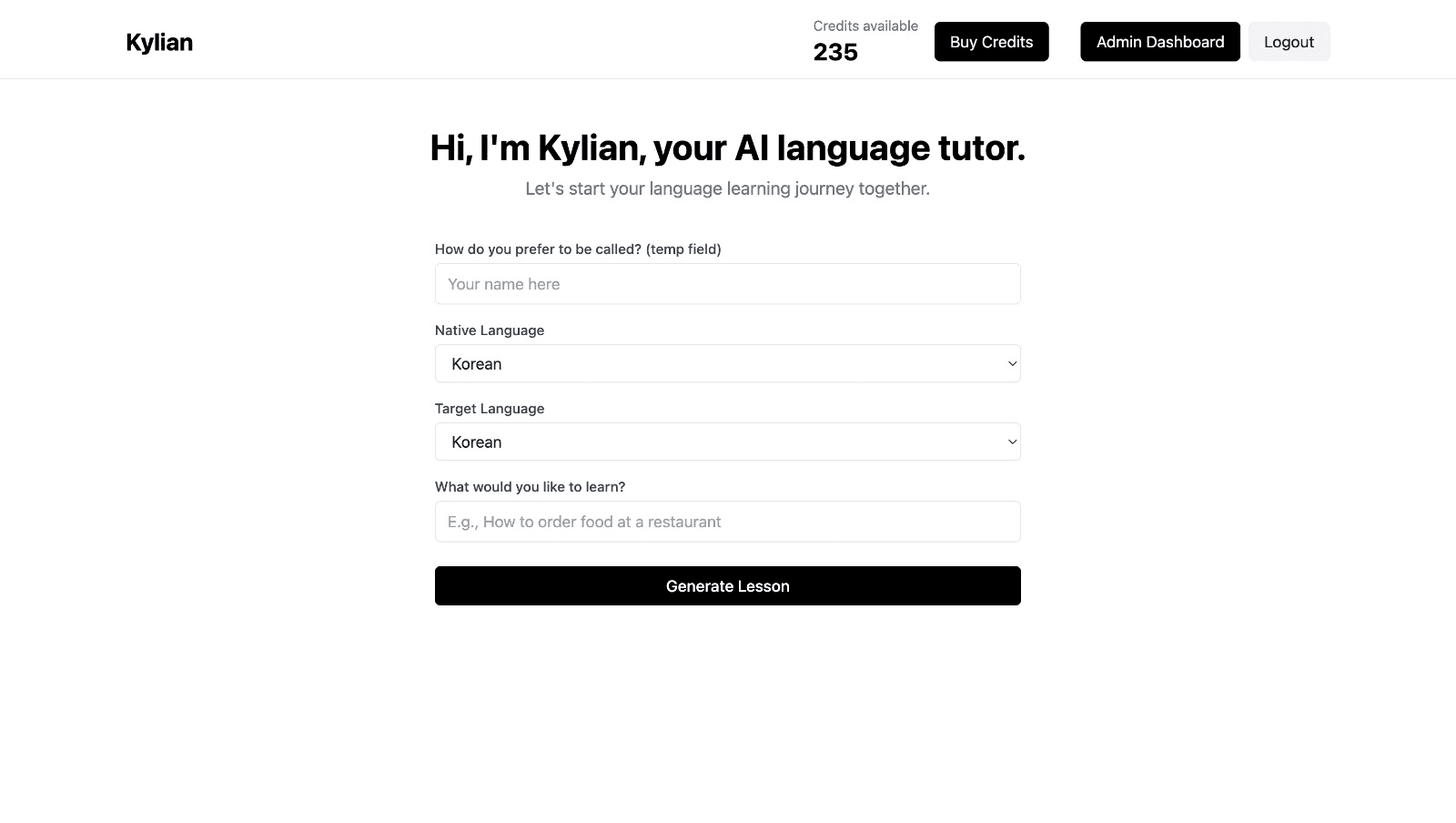
With Kylian, you’ll never again pay for irrelevant content or feel embarrassed asking “too basic” questions to a teacher. Your learning plan is entirely personalized.
Once you’ve chosen your topic, just hit the “Generate a Lesson” button, and within seconds, you’ll get a lesson designed exclusively for you.
Join the room to begin your lesson
The session feels like a one-on-one language class with a human tutor—but without the high price or time constraints.
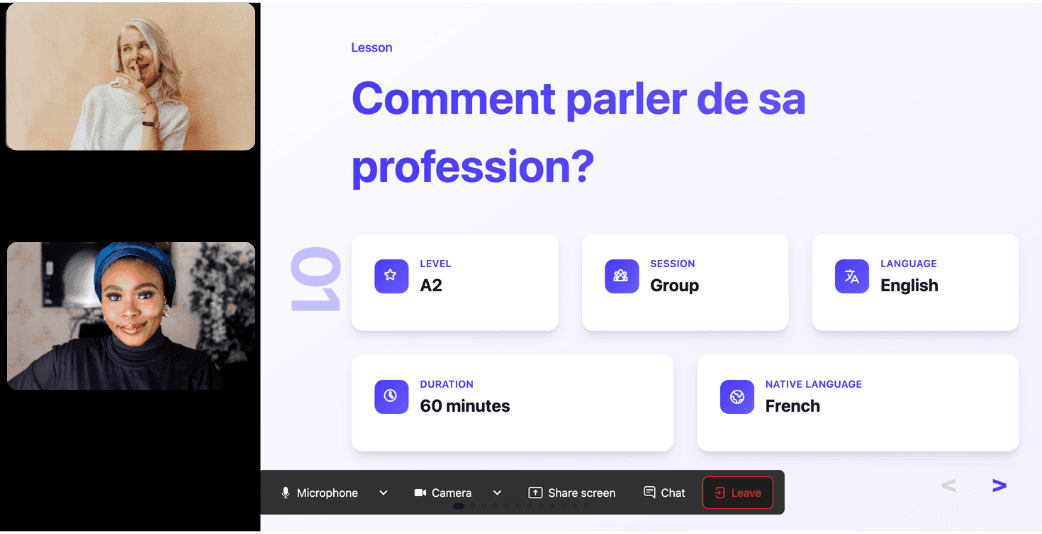
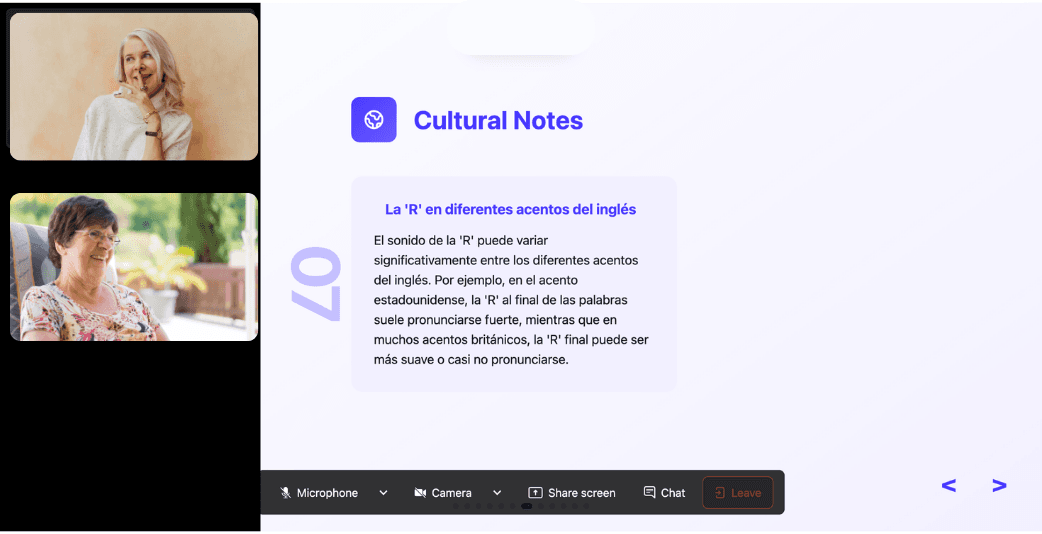
In a 25-minute lesson, Kylian teaches exactly what you need to know about your chosen topic: the nuances that textbooks never explain, key cultural differences between French and your target language, grammar rules, and much more.
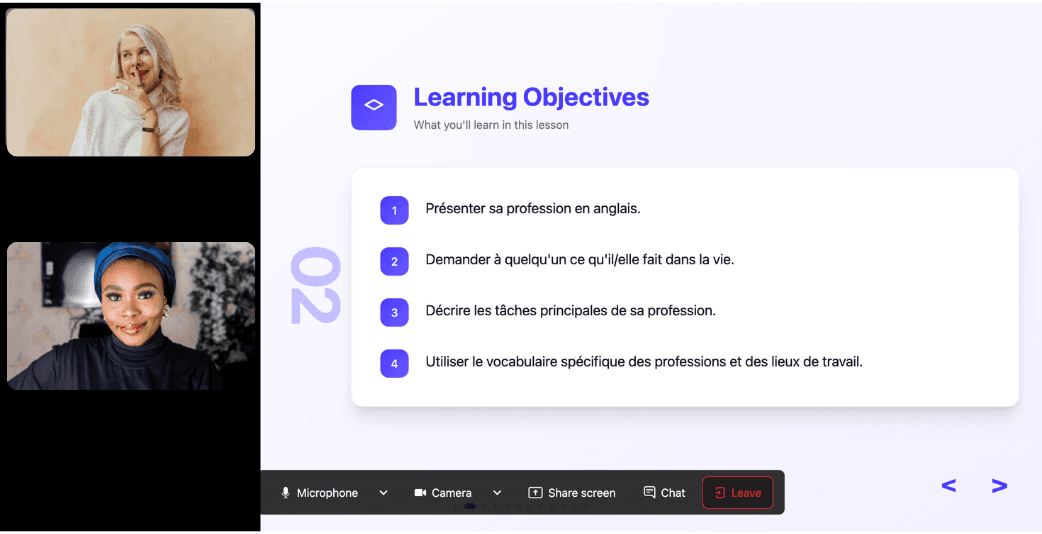
Ever felt frustrated trying to keep up with a native-speaking teacher, or embarrassed to ask for something to be repeated? With Kylian, that problem disappears. It switches intelligently between French and the target language depending on your level, helping you understand every concept at your own pace.
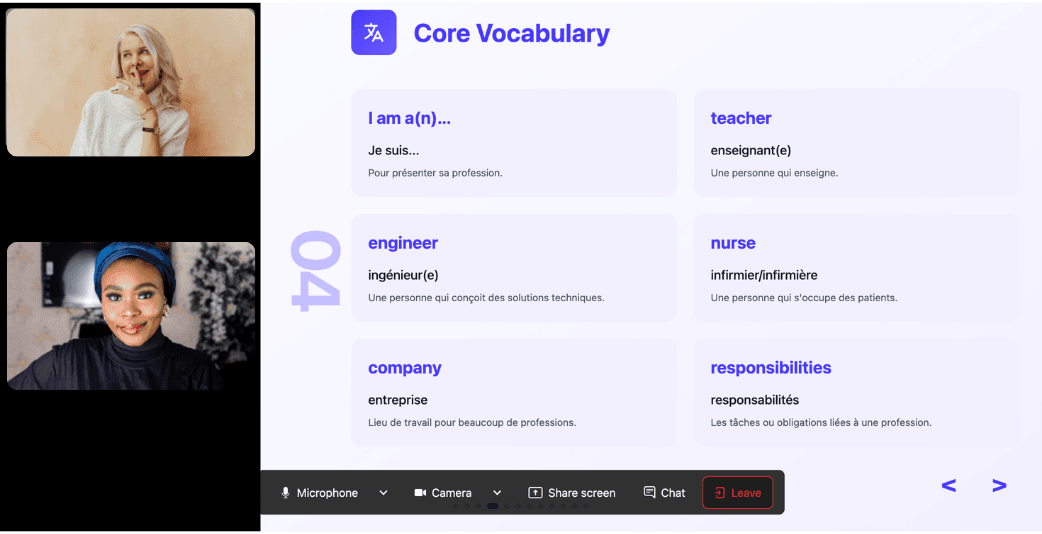
During the lesson, Kylian uses role-plays, real-life examples, and adapts to your learning style. Didn’t understand something? No problem—you can pause Kylian anytime to ask for clarification, without fear of being judged.
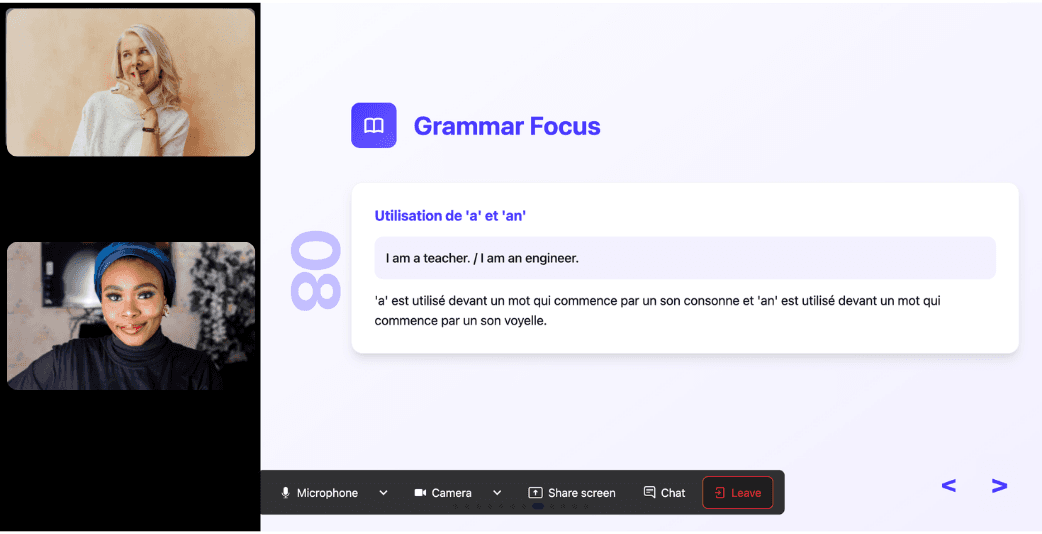
Ask all the questions you want, repeat sections if needed, and customize your learning experience in ways traditional teachers and generic apps simply can’t match.
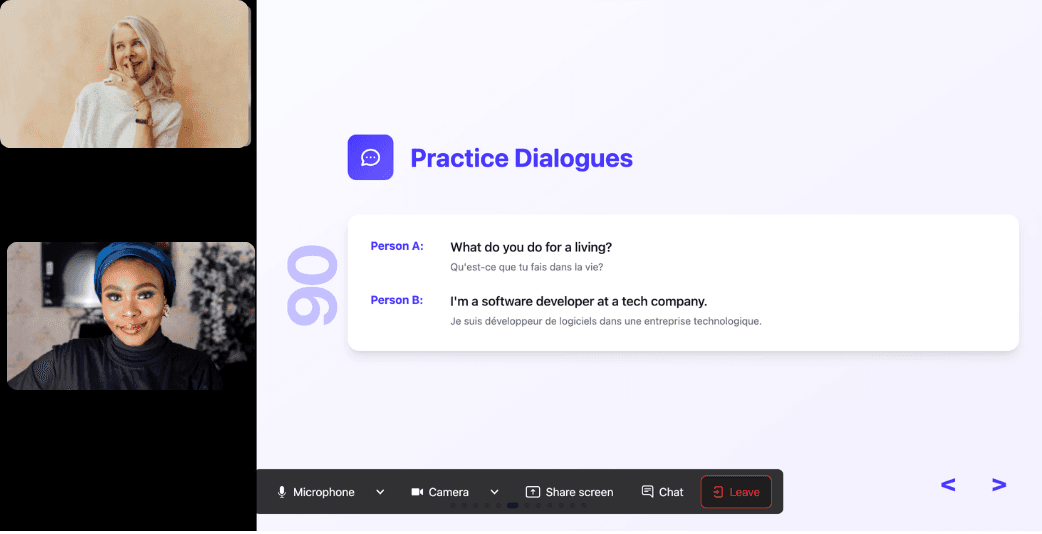
With 24/7 access at a fraction of the cost of private lessons, Kylian removes all the barriers that have kept you from mastering the language you’ve always wanted to learn.